Letras Academy
A platform to learn languages through music: free content, a subscription with lessons and courses, and a teacher marketplace. I led the design from discovery to delivery, with a team of six, at the start of the pandemic.
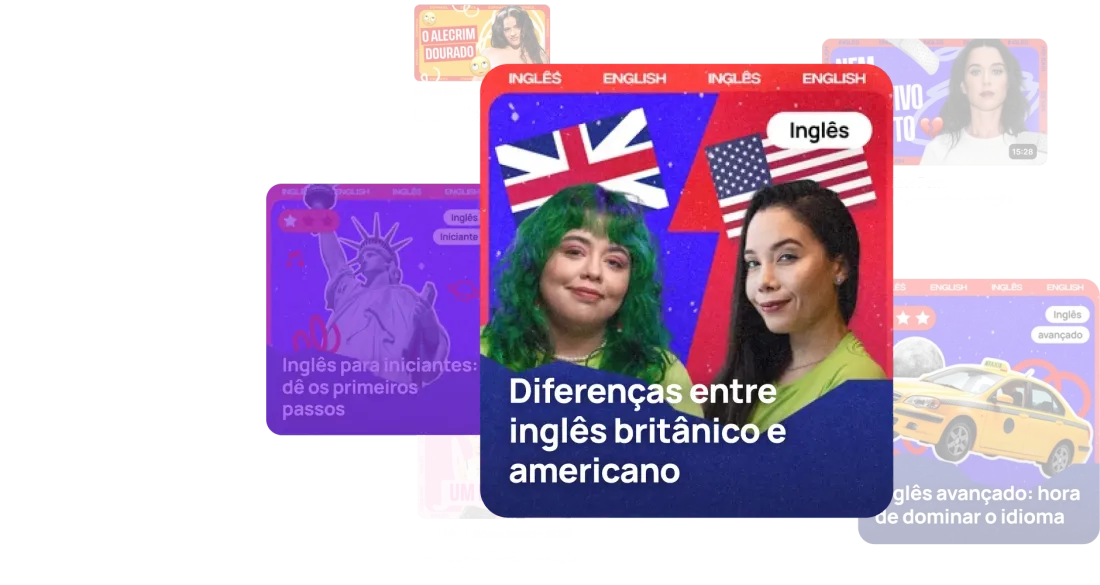
Letras Academy grew out of a piece of feedback we kept hearing: lots of people said they'd learned English by reading and translating song lyrics on Letras.
We decided to take that seriously and turn it into its own product, teaching languages through lyrics. It started in 2020 and launched in 2021, right in the middle of the forced shift to remote work during the pandemic.
The design question was how to serve three needs this different inside a single product, without bloating it or losing focus.
Before designing a single screen, an intense discovery: conversations with language teachers, benchmarking, market-share research, and a lot of talking to our users. It surfaced three very different pains that wouldn't fit into a single solution.
- A young audience wanting to learn a language through music. A large mass, but with little willingness to spend and driven by entertainment (English to travel, to understand films and series), not the classic "English for work" pains.
- Most weren't willing to pay much, or to pay at all. A small slice was, but demanded depth and human contact.
- Private teachers struggling to find students, stay organized, and get paid.
The subscription in two tiers
Since the general audience had little willingness to pay, the business depended on volume of subscribers, and volume would only come from covering every kind of need.
So we structured the subscription into two tiers, instead of betting on one:
- quick 15-minute lessons anchored to a specific song, tied to the user's taste and great for learning while having fun;
- full courses with a beginner-to-advanced track that use music but focus on learning.
Each tier covered a need that, on its own, wouldn't sustain the volume.
The free tier as top of funnel
The free tier didn't become a parallel product. We leaned it on what Letras already had, the translation, plus pointed pieces that made more sense pointing to the courses than standing alone.
That way the free tier fed the top of the funnel without competing with the subscription.
The teacher marketplace
The private teacher was a different order of value. Folding it into the subscription would demand a very high price that wouldn't work for the mass, and the people willing to pay for depth saw the value in each teacher's own time.
We kept the marketplace separate, monetized by a take rate on each transaction, and decided not to fix the teacher's hourly rate: pricing it would be unfair and would disengage exactly the people we wanted to attract.
It targeted the teacher's three pains at once: acquisition, scheduling, and payment.
First and foremost, this was a leadership project. As Design Manager, I directed a team of six designers through discovery, ideation, iterations, and a complex release, all under the strain of adapting to remote work.
I set up the rituals that were missing to make it work at a distance: team syncs, 1:1s, and development conversations.
But I made a point of not stepping away from the craft, and kept at least 40% of my week for execution, always paired with a designer. Working alongside them was how I trained and amplified each one without losing the thread of the real work.
Over time, we realized it made more sense to simplify the offering: the Academy content was unified into the single Letras subscription, in one plan. What this project left me with was the process, a discovery that mapped very different needs and product and business-model decisions built on top of them, plus the experience of leading a whole team through all of it remotely. It's the project that shaped me most as a design lead.
Credits
- Design Manager
- Josue Macedo
- Product Design
- Pedro Jota, Patrícia dos Reis, Sara Lins, Fernando Dilton, Maria Luiza Faleiro, Rayane Galdino
- Visual Design
- Clara Saldanha, Aline Fernandes, Bruno Camillo
Tools
Figma · Principle · ProtoPie